
A true story from the hills of Nepal. How a young village girl with no job, no money, and no connections found a sisterhood, a skill, and a future inside a felt workshop
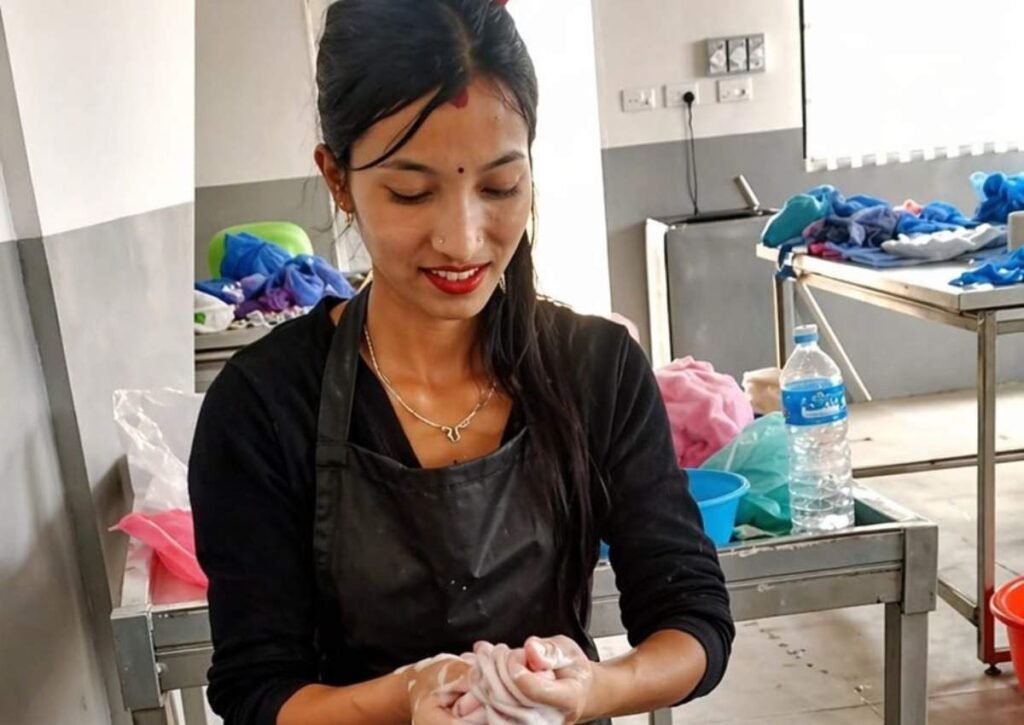
Her name is Sangita.
Three years ago, she was standing at a bus stop in Kathmandu. She had never been to the city before. She had no phone. No friend’s address. No job offer.
She had only one thing. A small bag of clothes. And a lot of fear.
The Stranger in the City
Sangita came from a village called Dhungeswori in Kavre. It is the kind of village you cannot find on Google Maps easily. The road is mud. The houses are stone. The nearest market is a two-hour walk.
Her father was a farmer. But the farm did not produce enough. The family survived on one meal a day.
“You are young,” her mother said. “Go to the city. Find something. Don’t end up like us.”
So Sangita left. She was 19.
She thought the city would welcome her. It did not.
For one week, she slept on the floor of a bus park. She washed her face at a public tap. She ate one meal a day – if she was lucky. She asked every shop, every factory, every tea stall: “Do you need any worker?”
The answer was always no. She knew no one. She was invisible.
The Turning Point (A Door That Opens)
On the seventh day, an old woman told her about a small felt wool workshop.
“They teach you,” the woman said. “No need experience. No need connections. Just your hands.”
Sangita did not even know what “felt” meant. But she walked to that workshop.
The workshop was not big. It had wooden tables, buckets of water, colorful wool fibers, and the smell of soap. Inside were only women – young women, all busy. All focused. All smiling sometimes at each other.
The owner – a woman herself – looked at Sangita. Dirty clothes. Tired face. Scared eyes.
“Can you work?” she asked.
“Yes,” Sangita said.
“Do you want to learn?”
“Yes,” she said again. Louder this time.
They gave her a seat. Not a job yet. A chance.
First Day (Clumsy Hands, Heavy Heart)
On her first day, Sangita held wool for the first time in her life. It was soft. Strange. She did not understand how loose, fuzzy fibers could become a solid sheet.
The trainer – a woman a few years older than her – showed her gently.
“Lay the wool like this. Cross. One layer. Another layer. Add soap water. Then press. Press slowly. Feel it with your heart.”
She pressed too hard. She pressed too soft. The wool broke apart. She felt stupid. She almost cried.
But no one laughed at her. No one shouted.
The trainer simply said: “Do it again. That is how we all started. I made the same mistake for two weeks.”
That sentence changed something inside Sangita.
For the first time in two weeks, she did not feel like a beggar. She felt like a student. And for the first time, she felt she was not alone.
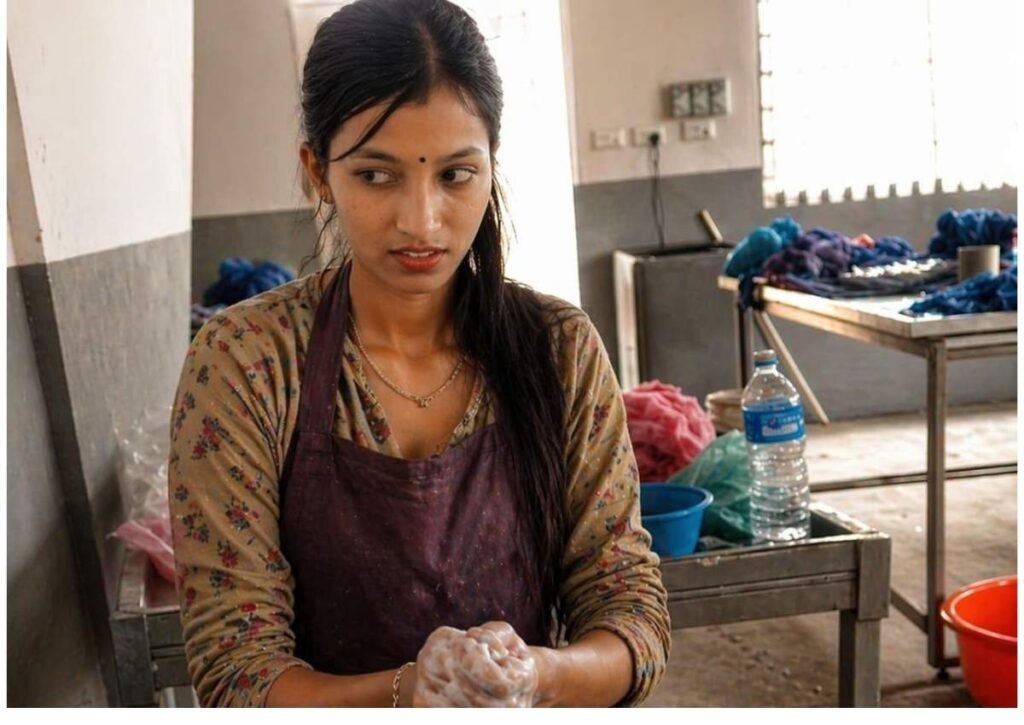
The Workshop Sisterhood (Strangers Become Family)
Within two months, Sangita had learned to make basic felt products – dryer balls, simple coasters, small bags, colorful keychains.
But more than the skill, she found something she had never had: sisters.
There were fifteen other young women in that workshop. All had similar stories. Some came from Dolakha. Some from Sindhupalchowk. One girl had walked three days to reach Kathmandu.
None of them knew anyone in the city either. They were all alone. But now they were alone together.
- They cooked and ate lunch together.
- They shared one cup of tea in the morning.
- They taught each other new techniques.
- They saved money together in a shared box.
- They celebrated festivals together – because no one had family in the city.
Sangita says: “These women are not my coworkers. They are my family. They held me when I had nothing. They are the reason I am standing today.”
The First Salary (I Cried That Day)
After three months of training, Sangita received her first salary.
It was not a large amount – about 8,000 Nepali rupees ($60 USD at that time). But for her, it was the biggest money she had ever held in her entire life.
She went to the workshop toilet, closed the door, and cried silently. Not because she was sad. Because she was proud. For the first time, she had earned something with her own hands.
She sent half of the money to her mother in the village. Her mother called her after a week (she had to walk two hours to the nearest phone).
“Daughter, I received the money. I bought rice. I bought oil. Your younger sister will go to school this month. Thank you.”
That phone call made Sangita work harder than ever. She realized: she was not just saving herself. She was saving her family.
Fast Forward – Today (From Student to Teacher)
Today, Sangita is 22 years old. She is no longer the scared girl who slept at a bus park.
She is now one of the senior women artisans at the same workshop. She trains new girls who come from villages – just like she once came.
Every time a new young girl walks into the workshop with dirty clothes, scared eyes, and no one in the city – Sangita is the first person to reach out.
“I was you. Sit here. I will teach you. Do not be afraid. You are safe now.”
Sangita now earns a steady income. She rents a small room near the workshop with two other women from her team. She owns a smartphone. She calls her mother every Sunday. And last year, she bought a small goat for her family in the village – an investment for their future.
Other Women, Same Story
Sangita is not alone.
There is Manju, who was married at 16 and divorced at 19. The village shamed her. The workshop gave her a new identity. Today, Manju is our senior quality checker.
There is Radha, who could not read or write when she arrived. She learned to sign her name in our workshop. Now she keeps the attendance register.
There is Gita, whose husband abandoned her with two small children. She thought her life was over. Today, both her children go to school because of her salary.
These are not special women. They are ordinary women who got one chance. That is all.
Why We Are Telling You This Story
You may be reading this from New York. Or London. Or Sydney. Or Berlin.
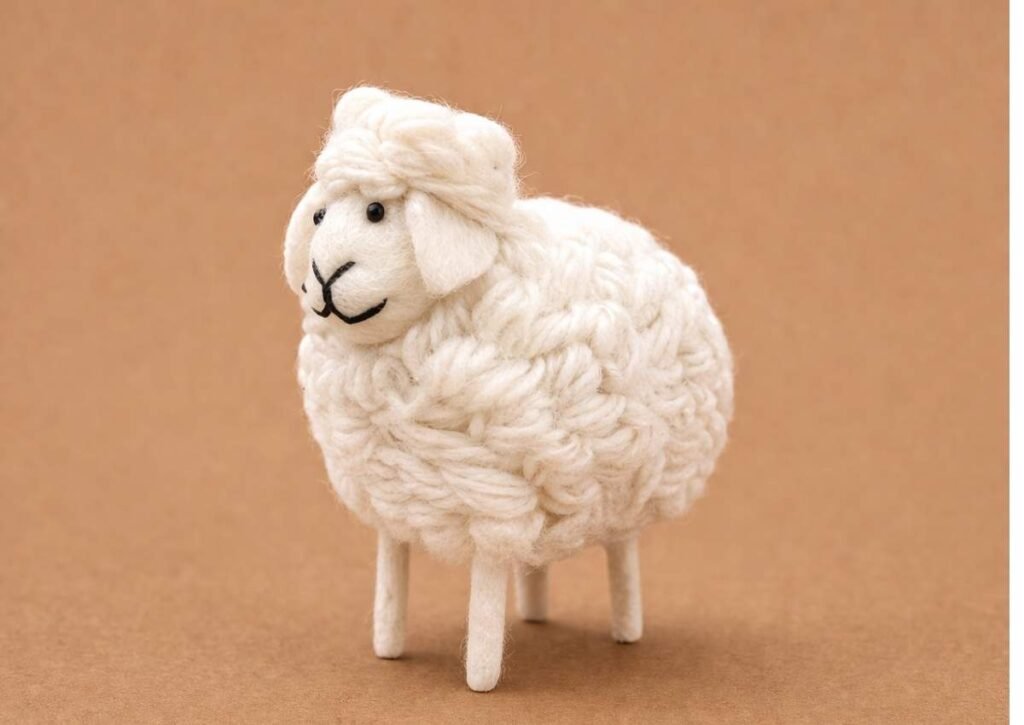
You may be looking for eco-friendly felt products. Handmade dryer balls. Felt coasters. Wool bags.
But here is what we want you to know:
Every product you buy from us – a woman made it with her own hands. And that product is sending her child to school.
What Your One Purchase Actually Does
$8–$12 : One woman’s full day meal + bus fare
$15–$25 : One week of school for her child
$30–$50 : Medicine for her parents in the village
$60–$100 : One month’s rent near the workshop
Not Charity. Dignity.
We are not asking for donations. We are not a charity. We are a fair-trade, ethical, handmade felt manufacturer run by and for women.
We sell beautiful, high-quality products. That is our business.
But our business model is simple:
We train rural women who have nothing. We give them a skill. They make excellent products. You buy them. Everyone wins.
That is not pity. That is respect. That is empowerment.
A Personal Request from the Founde
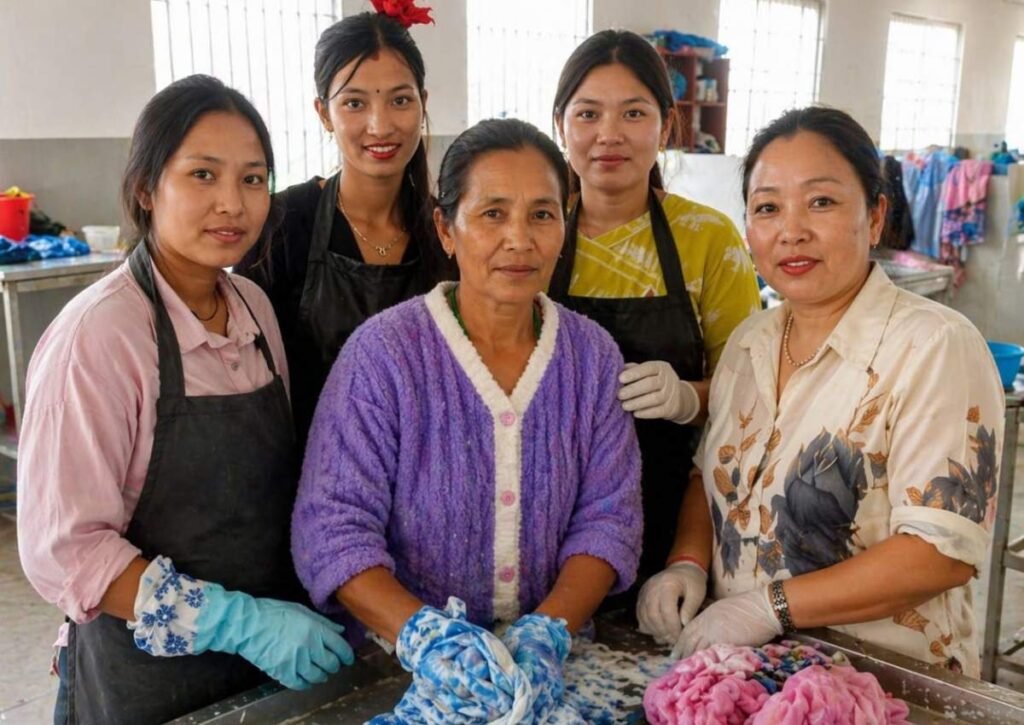
This business did not start with a business plan. It started with my wife.
She is a felt artisan. She came from a humble background – no luxury, no connections, no safety net. She struggled. She fell. She learned. And slowly, with her own hands, she built her skill from nothing.
Through her journey, she saw something that broke her heart. She saw young women sleeping on the streets of Kathmandu. She saw girls being sent back to villages because they had no skills. She saw widows being treated as burdens – invisible, worthless, forgotten.
She would come home and tell me: “These women are like me. I could have been them. Someone helped me. Now we must help them.”
That is how Perfect Picks Enterprises – our brand Hillyarn – was born. Not from a business degree. Not from a loan. From empathy. From lived struggle. From a woman who knew the pain of being invisible.
My wife understood the pain of those women because she had walked the same road. She knew the fear of having no job. The shame of asking for help. The desperation of wanting to work but having no skill.
So we started small. In Bhaktapur, she began teaching a few women what she knew. How to lay wool. How to press with patience. How to turn loose fibers into something solid and beautiful.
Slowly, others heard. They came from distant villages. From Dolakha. From Sindhupalchowk. From Kavre. Women with nothing but their hands and their will.
Today, we have a dedicated group of 25+ skilled women artisans working together in Bhaktapur, led by the experienced hands of Sarita and her team. My wife is the Master Felt Artist behind our brand – she shapes every design, ensures every product carries both quality and soul.
But the heart of this story is simple:
One woman who was once invisible now makes sure no other woman feels invisible again.
Every morning, when I walk into the workshop and see Sangita teaching a new scared girl – or my wife checking a new design – I feel I have done my small duty.
But I cannot do this alone. I need you – the customer who chooses women-made over machine-made. Who chooses natural over plastic. Who chooses dignity over cheap prices.
You are not just buying felt. You are employing a woman. You are feeding a child. You are keeping a family together. You are telling every struggling woman out there: “You matter.”
Your order does not just fill a warehouse. It fills homes with hope.
Thank you from the bottom of our hearts.
– Ashwini Kumar Pariyar
Founder, Perfect Picks Enterprises (Hillyarn) Our web link
P.S. My wife still works alongside her team every day. She is not sitting in an office. She is sitting on the floor, hands in wool, water, and soap. That is where she belongs. That is where this dream began.
Contact Us
Email: info@hillyarn.com WhatsApp: +977 9769497537 Website: www.hillyarn.com