
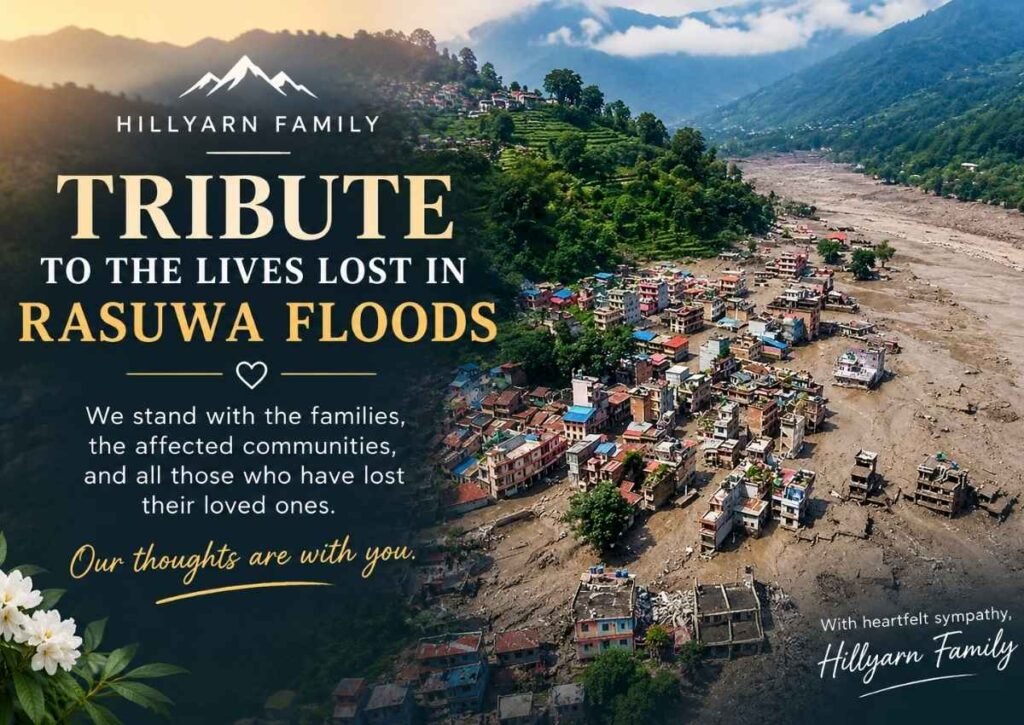
A “Mountain Tsunami” That Tore Through the Himalayas
August 26, 2026, began as an ordinary late-summer morning in Nepal. No one could have predicted that it would become one of the darkest days in the nation’s modern history.
Near Langtang Lirung, on the border between Nepal and Tibet, at an altitude of about 5,200 meters, a glacier suddenly collapsed. The falling ice and rock slammed into the valley with such force that it was recorded by US Geological Survey seismometers as a magnitude 5.2 earthquake. That force triggered what UN officials have called a “mountain tsunami” — a massive debris flow carrying ice, water, rock, and sediment downstream with unstoppable force.
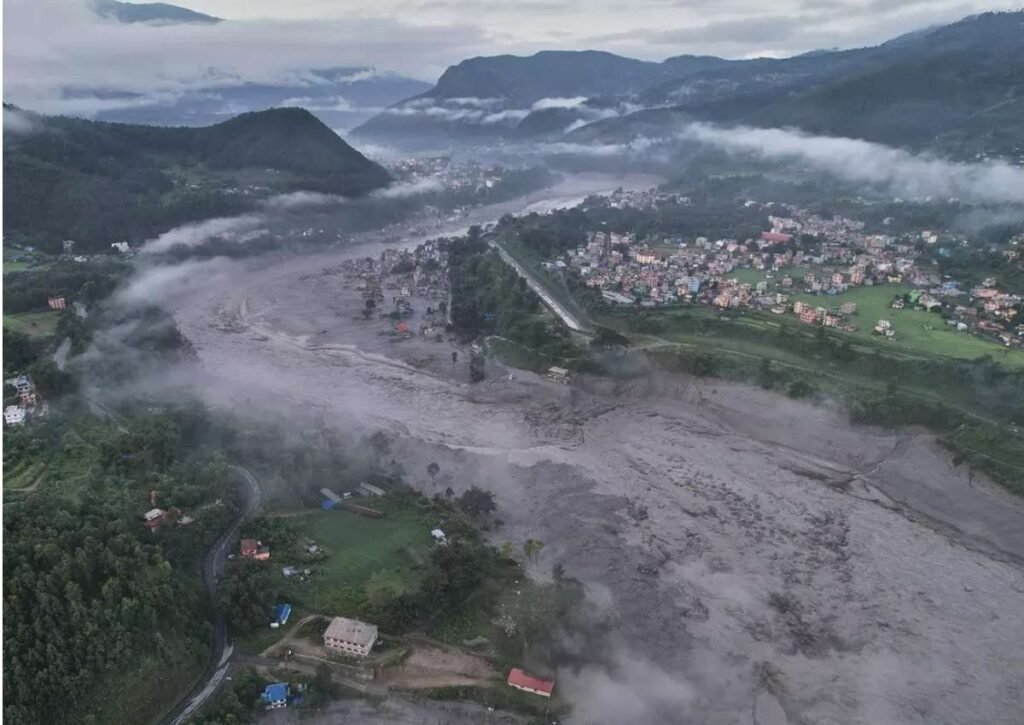
The flood devastated Rasuwa, Nuwakot, Dhading, and Kavre districts, eventually reaching the Kathmandu Valley. Villages that had been peaceful for generations were flattened. Bridges collapsed. Roads were swallowed. Communications went dark. Countless families were torn apart in their sleep by the sudden torrent.
Behind Every Number Is a Life
As of mid-September 2026, the death toll had exceeded 1,300, with over 5,000 people still missing. More than 13,000 people had been rescued, and over 9,000 were injured. Over 21,000 security personnel were deployed in search and rescue operations — one of the largest mobilizations in Nepal’s history.
But behind every number is a name. A face. A story.
Approximately 600 children are missing in Rasuwa and Nuwakot districts. In Bidur municipality alone, roughly 250 children have still not been found. Some surviving parents are desperately searching for their children in the rubble. Others — children themselves — are searching for their parents. These are scenes that would break anyone’s heart.
Twenty-two teachers and school staff are among the missing. Some were on a pilgrimage to Rasuwa when the disaster struck.
The missing also include 587 foreign nationals from 38 countries. They were tourists, engineers working at hydropower projects, and travelers who had come to experience the beauty of the Himalayas. Around 80 American citizens are among those still unaccounted for.
This Was Not a “Natural Disaster” — It Was a Climate Crisis
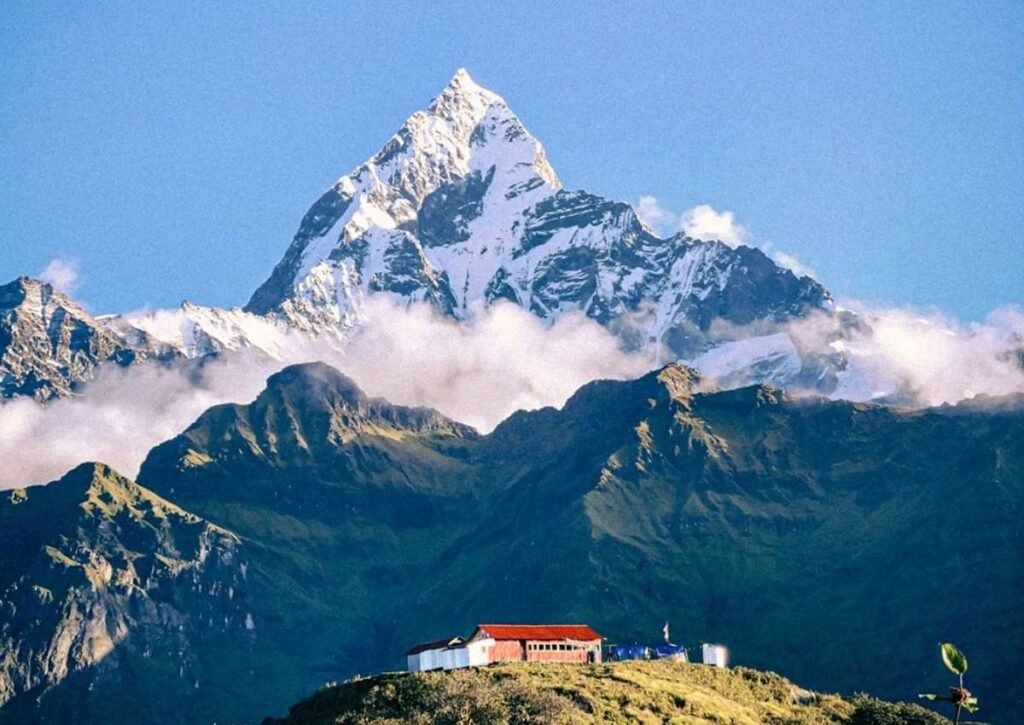
Some might say that Nepal sits on a seismic fault line, and that landslides are simply natural phenomena. But science tells us the truth is far more brutal.
On September 16, the World Weather Attribution group released a study by 24 scientists from 14 institutions. Their conclusion was clear: “There is no doubt that human-induced climate change played a role here.”
The study noted that in July and August 2026, temperatures in the region were about 1.5°C above pre-industrial levels. Glaciers are thinning by roughly half a meter per year. Permafrost is melting. These changes — combined with the geological wounds left by the 2015 earthquake — have weakened the stability of the mountains.
Nepal, a country that contributes just 0.05% of global greenhouse gas emissions, is paying the heaviest price for a crisis created by the world’s wealthiest nations. As Nepal’s foreign minister put it: “We did not create this global crisis, yet we are bearing its most extreme consequences.”
The Families Who Lost Children, the Children Who Lost Parents
In Bidur municipality of Nuwakot, an education official said something that silenced everyone:
“What is happening on the ground is deeply heartbreaking. In some cases, we find surviving parents who cannot find their children. In others, surviving students are searching for their missing parents.”
This is the cruelest part of this disaster. It did not just take lives — it tore families apart, created orphans, and left wounds that will never fully heal. A mother who lost her child, a teenager who cannot find her parents — their pain will not fade when the news cycle moves on.
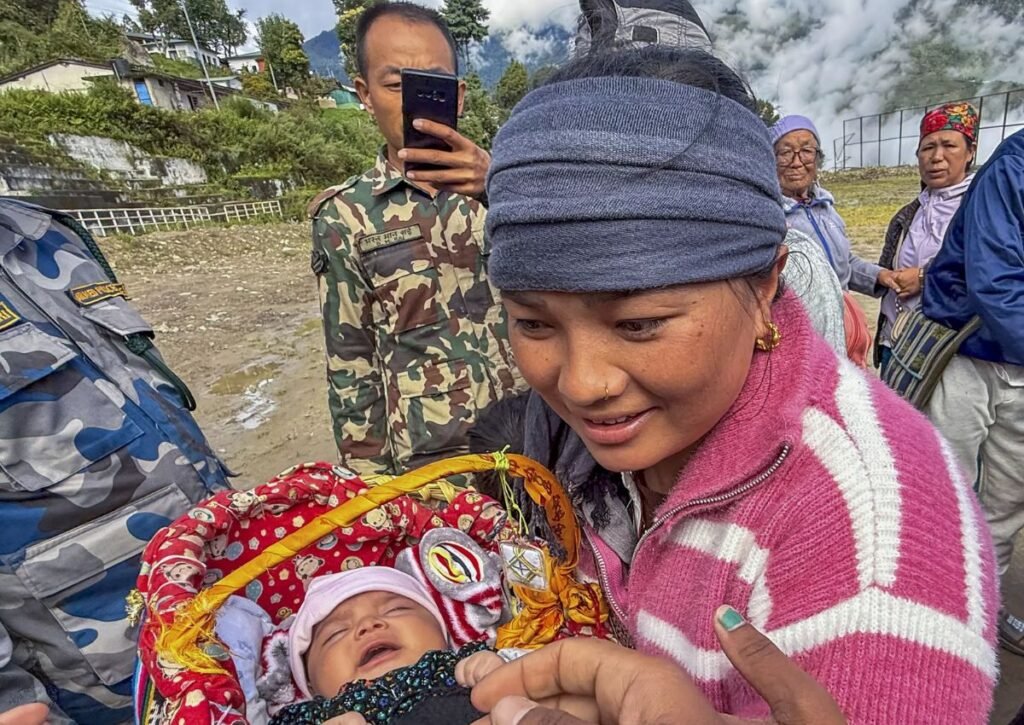
Nepal Is Not Alone
More than 21,000 search and rescue personnel were deployed. The Nepal Army conducted 1,348 helicopter flights. Armed Police Force teams completed 272 missions. Rescue workers dug through mud and debris with their bare hands in extreme terrain, searching for signs of life.
Nine days later, two workers trapped inside the Trishuli 3A hydropower tunnel were pulled out alive — Kabir Maharjan, 45, and Sanjay Sah, 30. A faint light of hope in the darkness.
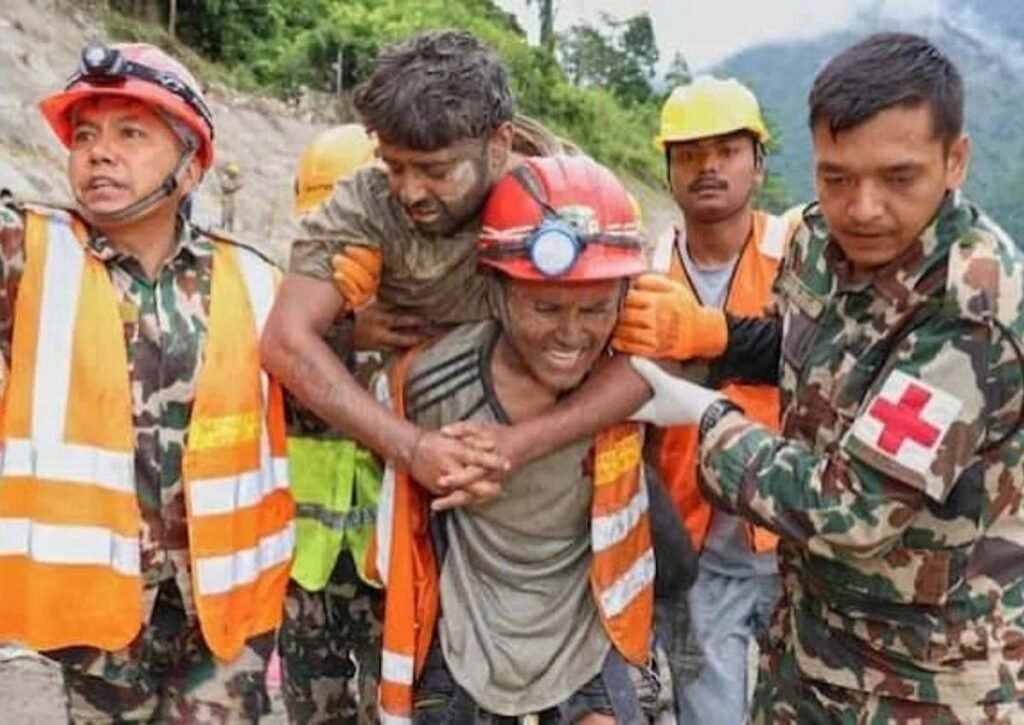
The international community has responded. The United Nations and its humanitarian partners launched a $49.6 million appeal to provide life-saving assistance to more than 84,000 affected people over four months. China rushed tents, blankets, medical protective gear, and satellite communications equipment. Swiss aid organizations have raised over 4 million francs.
But this is far from enough. The Nepali government estimates that reconstruction will cost approximately $4.78 billion. And with winter approaching, thousands of homeless families face the threat of freezing temperatures.
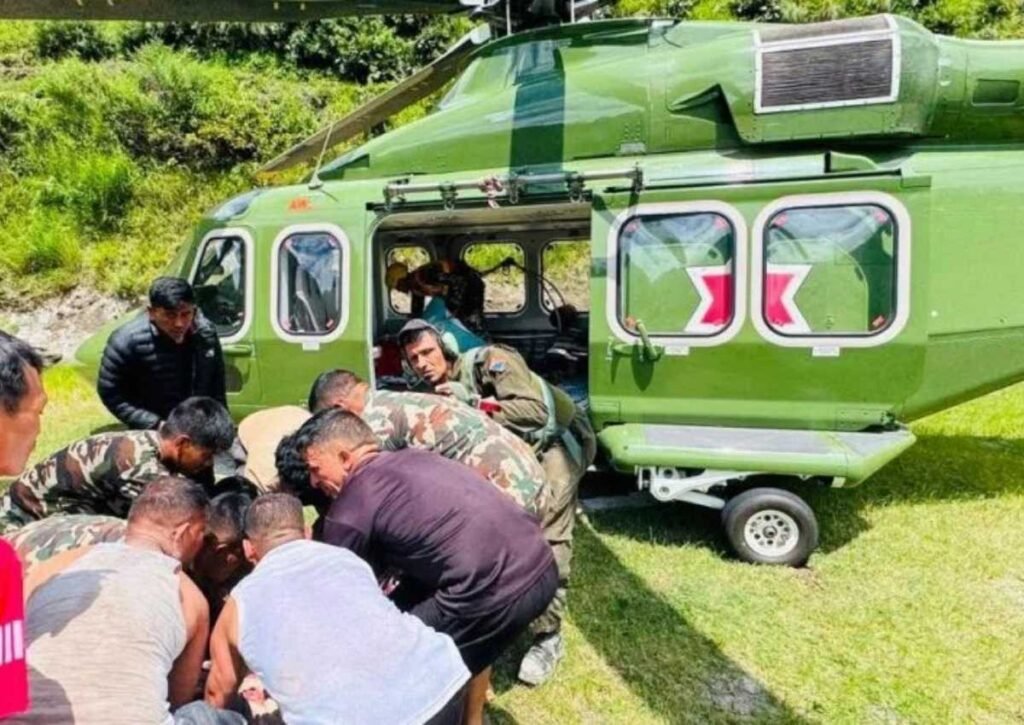
A Choice We Can All Make
In the face of such overwhelming loss, it is easy to feel helpless. But there is something we can all do — something that connects us to Nepal and to the planet we share.
Every time we choose natural, handmade products over mass-produced plastic, we make a small contribution to a healthier planet. Climate change is not an abstract concept — it is the reason why glaciers are melting, why mountains are collapsing, and why families in Nepal are grieving today.
Plastic doesn’t disappear — it breaks into smaller pieces. A single plastic bottle can take up to 450 years to decompose, and during that time it fragments into microplastics that enter our soil, rivers, oceans — and eventually our food chain.
The textile industry is one of the biggest sources of microplastic pollution. Every time synthetic clothing is washed, hundreds of thousands of microplastic fibers shed into waterways. These microplastics have been found in snow at Everest Base Camp and in the droppings of Himalayan birds in Nepal.
Many mass-market “felt” toys and decorations are actually plastic. They are made from polyester or acrylic — essentially petroleum-based plastic. They do not biodegrade and will persist in the environment for centuries.
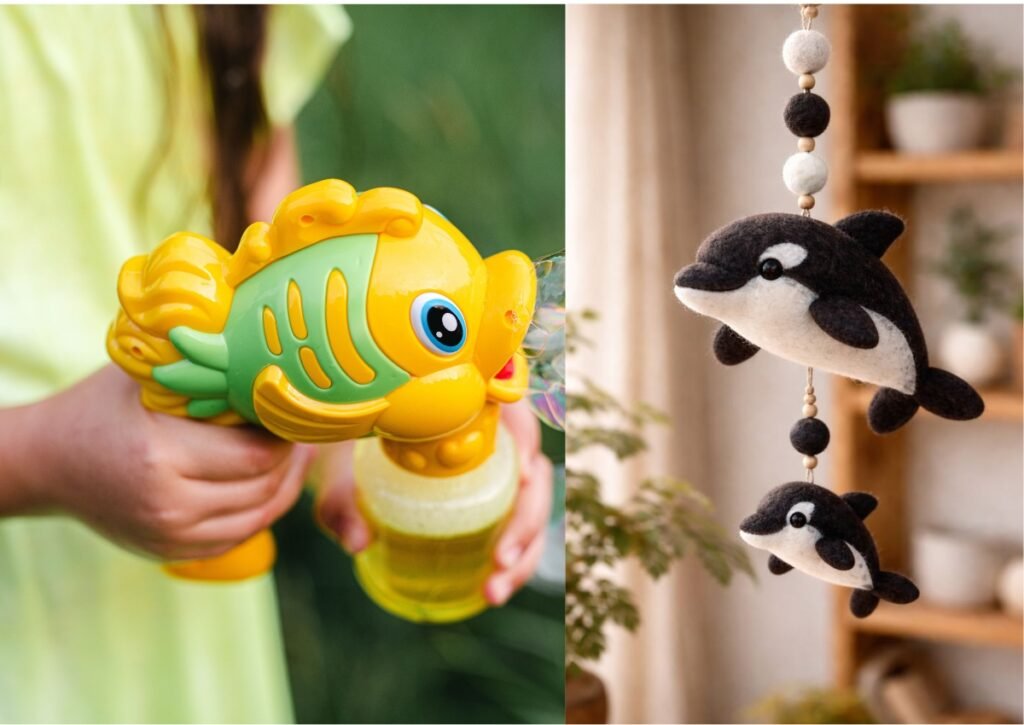
Wool: Nature’s Answer, Climate’s Ally
Wool is one of the most sustainable textile materials on Earth. It is a natural, renewable resource — sheep regrow their fleece every year, using only sunlight, water, and grass. Unlike petroleum-based plastics, wool biodegrades naturally at the end of its life, returning to the soil as nutrients for microorganisms.
Wool does not shed microplastics. This is the key difference. Wool fibers are made of keratin (a protein) and are broken down naturally by fungi and bacteria in soil or water. When you choose wool, you are not choosing another source of pollution — you are choosing a material that can safely return to nature.
Wool’s durability means less waste. A handmade wool felt toy can last a child’s entire childhood, while plastic toys typically crack, fade, and end up in landfills within a few years.
Every 1 kg of recycled felt produced saves approximately 541 liters of water, 54.5 kg of CO₂, and 92 kWh of electricity — equivalent to filling 4.5 bathtubs or charging a laptop 150 times. Natural wool felt performs even better.
In Nepal, Felt Is More Than a Product — It Is Dignity
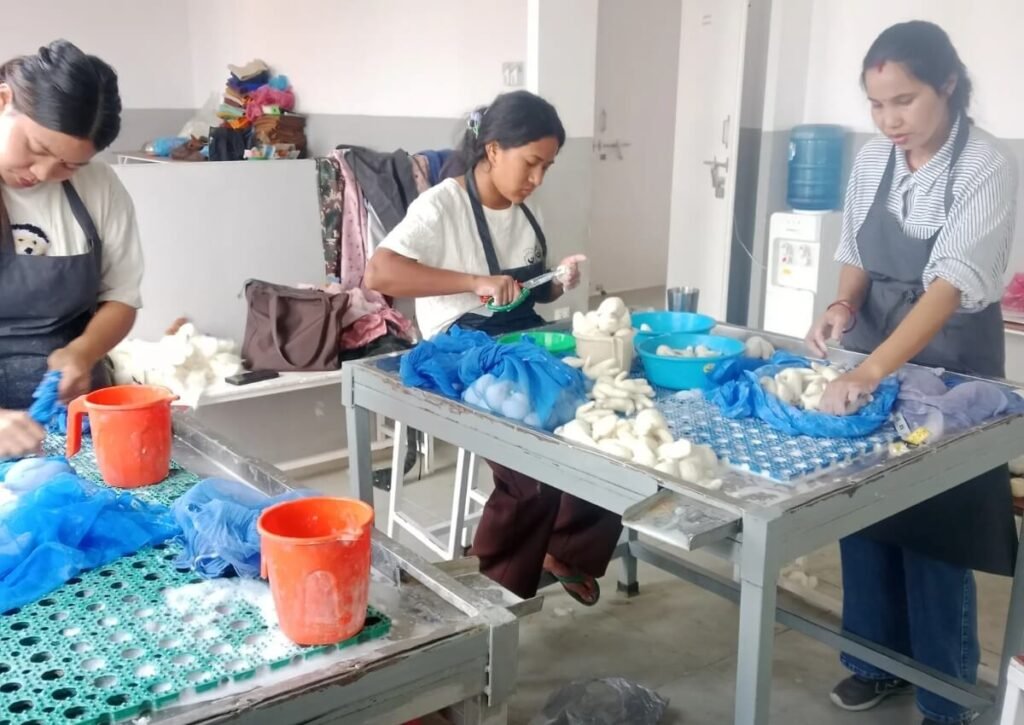
In Nepal, felt-making is an ancient craft passed down through generations. Artisans use two traditional methods: wet felting — pressing wool fibers together with hot water and organic soap; and needle felting — sculpting details with specialized needles. Throughout the process, no chemical binders, no synthetic fibers, and no electricity are used.
But at Hillyarn, felt means far more than that.
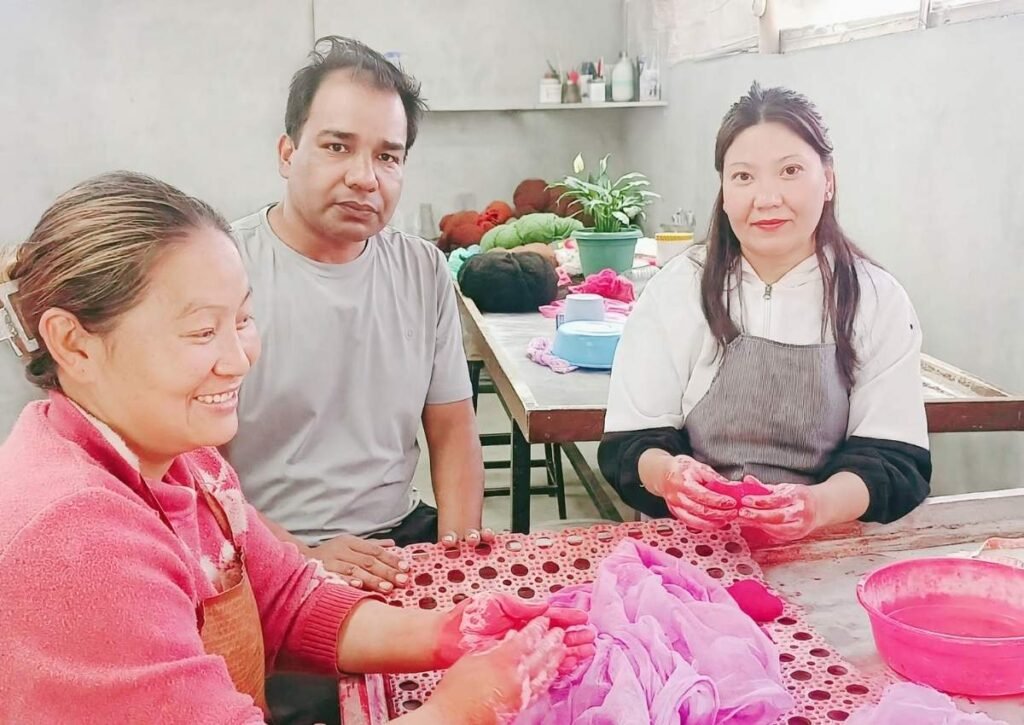
Our workshop is based in Bhaktapur. Here, over 25 women artisans shape wool with their hands — and shape their own futures in the process. Many of them are single mothers. Some came from remote mountain villages. Some belong to communities that have historically faced social exclusion. They once had no steady income, no safe place to work, no opportunity to use their skills.
Today, they have all of that — and more.
They have learned the art of wet felting and needle felting. They have gained steady income. They can pay their children’s school fees, prepare festival meals for their families, and earn respect through their own hands. They are no longer just “workers” — they are creators, designers, and leaders.
This is not charity. This is dignity.
Our founder, Ashwini Kumar Pariyar, once said:“Every item is not just raw wool and skill; it is a profound human contribution born of hard work, emotional resilience and a mother’s love to build a better future for her children. I wish people would truly value and respect that silent dedication.”
Why the World Needs Handmade Wool Now More Than Ever
The Rasuwa floods were a wake-up call. They showed us that climate change is not a distant threat — it is here, and it is affecting real people, real families, real communities.
The global textile industry is part of the problem. Synthetic fabrics — including polyester felt — are made from petroleum, a fossil fuel. They do not biodegrade. They shed microplastics into our waterways. They contribute to the very climate crisis that caused this disaster.
Handmade wool is part of the solution. Wool is natural, renewable, and biodegradable. It does not require fossil fuels to produce. It does not shed microplastics. It can be made locally, by hand, with minimal environmental impact.
When you choose handmade wool felt over synthetic alternatives, you are making a small but meaningful choice for the planet.
And when you choose to source from Nepal, you are supporting a country that is on the front lines of the climate crisis — a country that has done almost nothing to cause the problem, but is suffering its worst consequences.
For Boutiques, Gift Shops, and Wholesale Buyers in the USA, Canada, and Australia
If you are a boutique owner, gift shop curator, or online retailer in the USA, Canada, or Australia, you have a unique opportunity to make a difference.
By sourcing handmade felt products from Nepal, you are:
- Supporting women artisans who are rebuilding their lives after disaster
- Choosing sustainable materials over plastic and synthetic alternatives
- Telling a story that resonates with conscious consumers
- Contributing to a model of business that values people and planet over profit
At Hillyarn, we work with over 25 women artisans — many of whom are single mothers, women from remote villages, and members of marginalized communities. Every product they make is a step toward independence. Every order you place is a step toward recovery.
We are not asking for charity. We are asking for partnership. A partnership that benefits your business, your customers, and the artisans of Nepal.
Our Products: Handmade with Love, Rooted in Nepal
At Hillyarn, we specialize in ethically made felt products that are:
- Handcrafted using traditional wet felting and needle felting techniques
- Made from 100% natural New Zealand wool — biodegradable, renewable, and gentle on the planet
- Colored with AZO-free dyes — no toxic chemicals, safe for children and pets
- Child-labor free — because childhood should be spent learning and playing, not working
Our collection includes:
| Product | Description | Perfect For |
|---|---|---|
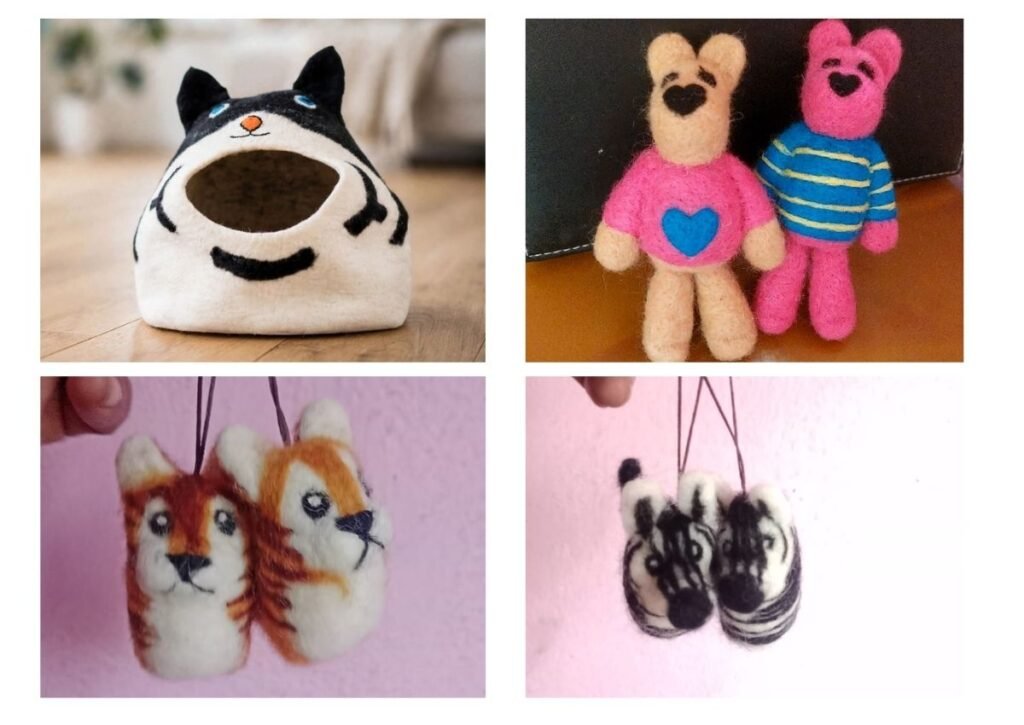
| Wool Cat Caves | Cozy, eco-friendly pet beds | Pet boutiques, gift shops |
| Wool Dryer Balls | Sustainable laundry essentials | Eco-friendly home stores |
| Needle-Felted Ornaments | Christmas and seasonal decor | Holiday gift shops |
| Home Decor | Vases, baskets, decorative accents | Interior design stores |
| Custom Designs | Made to order, any color, any size | Boutiques seeking unique products |
| Gift Sets | Curated collections for holidays | Gift shops, online retailers |
Every product is made by hand, by a woman who is building a better future for herself and her family.
Why Partner with Hillyarn?
If you are a retailer in the USA, Canada, or Australia, here is what we offer:
| Feature | Details |
|---|---|
| Ethical Production | Women artisans, fair wages, safe conditions |
| Made to Order | Custom colors, sizes, and designs |
| MOQ | 50 pcs per design/color |
| Sample Time | 3-5 days |
| Bulk Lead Time | 15-20 days |
| Shipping | DHL/FedEx worldwide, 4-6 days |
| Materials | 100% New Zealand wool, AZO-free dyes |
| Compliance | Child-labor free, eco-friendly |
| Private Label | Your logo, tags, packaging |
| Response Time | Within 24 hours |
We are not just a supplier. We are a partner in creating a more ethical, more sustainable world.
Final Words: Nepal Will Rise Again
Nepal has faced earthquakes, pandemics, and now floods. Each time, its people have risen. Each time, they have rebuilt. Each time, they have shown the world what resilience truly means.
But they should not have to do it alone.
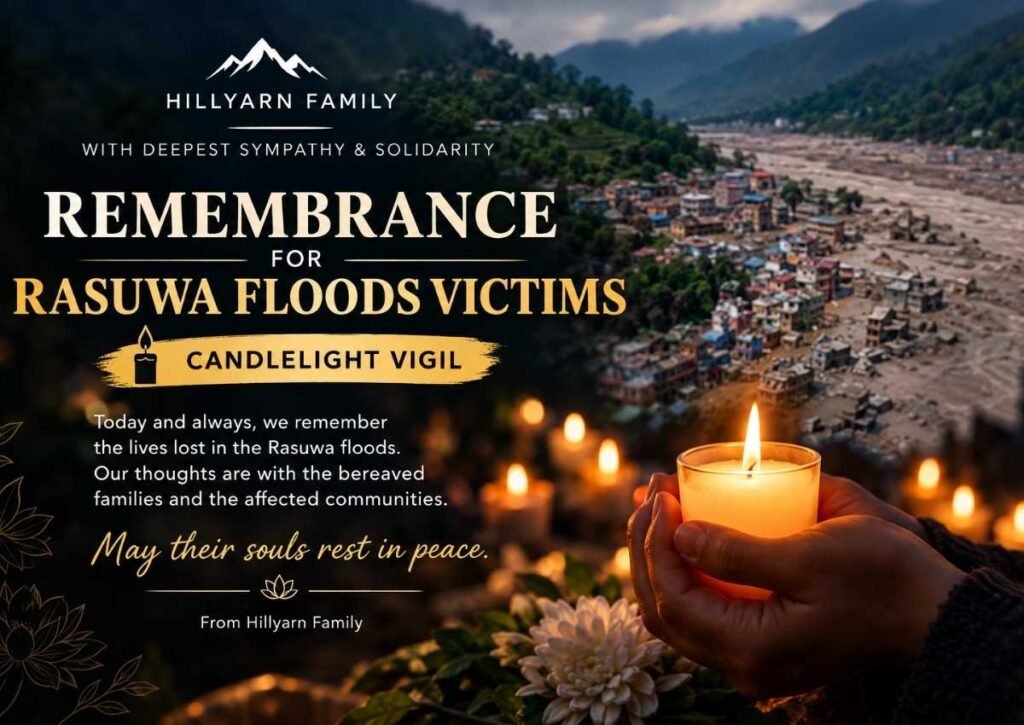
To the families who lost loved ones: we see you. To the children still missing: we have not forgotten you. To the survivors who are rebuilding: we stand with you.
May the departed rest in peace. May the survivors find strength. May every missing person, wherever they are, be found.
And may the world remember — not just today, but every day — that climate change is real, and that its victims are real people with real names and real dreams.
Hillyarn — Where Your Imagination Comes Alive in Wool. Woven with purpose. Rooted in Nepal.
👉 Start your wholesale inquiry at hillyarn.com/wholesale
Fast response within 24 hours. Free samples. No obligation.
As featured on ArtisanJoy.